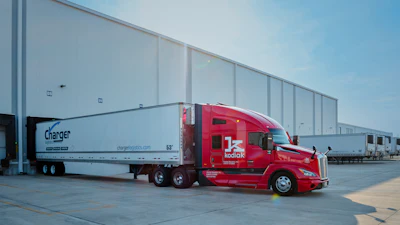
Kodiak AI, Inc., a leading provider of Physical AI-powered autonomous driving technology, and Charger USA, a cross-border carrier serving the United States and Mexico, recently announced a collaboration for autonomous freight delivery.
Through this collaboration, trucks equipped with the Kodiak Driver, Kodiak's autonomous driving system, are hauling refrigerated and dry freight for consumer packaged goods and food and beverage customers on the 435-mile lane between Charger’s terminals in Dallas and Laredo, Texas. Kodiak and Charger completed their first delivery Sept. 8.
The companies are operating with a safety driver behind the wheel. The companies intend to transition the lane to driverless operations once Kodiak completes its safety case. A safety case is a structured, evidence-backed argument that the Kodiak Driver is acceptably safe to operate in a specific domain.
This collaboration marks Kodiak’s first route serving Laredo, the highest-volume commercial land port of entry in the United States. The Port of Laredo handled over $350 billion in international trade in 2025, amounting to nearly 40% of all United States trade with Mexico.
"Autonomy lets us build a network that serves both our customers and our drivers," said Andy Khera, President, Charger USA. "Combining our in-house TMS, managed transportation, and the Kodiak Driver creates a nearly fully automated ecosystem that gives our customers long-term capacity continuity through changing labor markets and freight demand, while bringing our drivers home every night."
Charger operates across North America as an asset-based carrier, with temperature-controlled transport freight among its core service lines. The companies expect to expand the collaboration to additional lanes in Charger’s network over time as Charger integrates the Kodiak Driver into its own fleet.
Kodiak plans to launch long-haul driverless service by the end of 2026.
Estes honored for 5th year in a row
- Recognized as the No. 1 best value provider among all national carriers for the fifth straight year
- Ranked No. 2 overall among national LTL carriers
- Ranked No. 1 in ease of using the website
- Ranked No. 1 in accessorial and surcharge pricing, competitive pricing and rate stability
- Earned a Net Promoter Score (NPS) of 62.8, well above the industry average of 54.4
- Satisfaction improved year-over-year
- Improved its overall performance, satisfaction and value scores from 2025
FMCSA grants AV flasher exemption
The Federal Motor Carrier Safety Administration recently granted a five-year exemption allowing autonomous trucks to use cab-mounted warning beacons in place of the reflective triangles human drivers place around a stopped vehicle. The exemption applies to any SAE Level 4 carrier that notifies the regulator first.
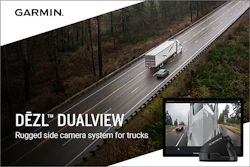


The exemption is not a blank cheque. Beacons must be set to amber, mounted at least 100 inches high, and activated within five minutes of a stop — half the ten minutes human drivers are allotted to deploy triangles. Trucks running beacons must stay within their validated operational design domains and cannot carry hazardous materials or passengers.
Carriers must report any crash involving active beacons and file annual reports on malfunctions. States are barred from enforcing conflicting rules on interstate operations covered by the exemption.
ICYMI
FMCSA extends regional emergency regulatory relief from 14 to 30 days