
Back then, the Magic 8 Ball was one of the hottest novelties of the day. Simply put, it was an oversized poll table 8 ball, that when turned over, supplied an answer to any question you asked. The answers could be positive ("Yes definitely"), negative ("My reply is no") or non-committal ("Ask again later").
Now let's use the Magic 8 Ball's answers (No, we're not using the actual 8 Ball!) when considering what's ahead for the U.S. trucking industry in 2026.
Q: Will the Great Freight Recession end soon?
A: Outlook not so good. Most informed observers believe the three-year-long industry malaise caused by low rates, over-capacity and reduced freight demand is expected to drag on through most of the first half of the new year. Things are expected to improve in the second half, depending in part on what happens with the mid-term elections. Costs continue to increase because of tariff-driven uncertainty in the economy, inflation and insurance costs. For prospects to improve, excess capacity needs to shrink, and manufacturing and the housing market need to rebound significantly. Some say larger than normal tax refunds an Trump's proposed tariff rebate checks could provide some uplift ... if people spend therm.
Q: Can the industry expect to see less cargo theft?
A: Don't count on it. Cargo theft in 2025 was worse than it was in 2024, and 2026 is expected continue that trend. There were increases in the number of thefts and the total value of cargo being stolen. By the third quarter of 2025, the average value per stolen shipment doubled to over $330,000. While there's expected to be a continued increase of industry efforts, cargo thieves are expected to become even more sophisticated with the help of AI. High-value goods such as electronics, and easily sold items (food and beverages) will remain targets. Several pieces of legislation (the Combating Organized Retail Crime Act, the Cargo Security Innovation Act, the Porch Pirates Act of 2025 and the Safeguarding Our Supply Chains Act) have been introduced in Congress. However, the likelihood of the passage of any of them is questionable given the tenor of things in Washington these days. Bottom line: carriers and brokers need to redouble their defensive efforts, and educate everyone involved in cargo handling.




Q: Will the pace of mergers and acquisitions continue? Will more fleets file for bankruptcy in 2026?
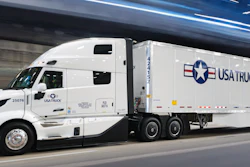
A. It is decidedly so. The calendar pages from 2025 and 2026 had hardly stopped flipping when two major acquisitions occurred. In the same first full week of January, both USA Truck and Dart Transit and Dart Express had new ownership. Market pressures (See Great Freight Recession above) and rising costs -- especially insurance -- will force some struggling mid-sized carriers to look for a buyer. Also, some family-owned fleets may sell as there is less desire by the next generation to continue in the business. Look for larger carriers to strengthen their various divisions by acquiring smaller, specialized carriers. And, unless the economy improves many marginally-successful carriers may be forced out of business before conditions improve.
Q: Will 2026 see any improvement in the shortage of safe and secure truck parking?
A: Cannot predict now. The year gone by was hardly a banner year for the creation of new truck parking in the U.S. It still remained one of the top concerns (second behind driver pay) of truckers in the latest survey of issues by the American Transportation Research Institute. Pennsylvania created some new parking spaces primarily by formalizing spaces on interstate ramps. By year's end, the commonwealth will have added 1,200 new spots for truckers. Florida, Texas and Louisiana received federal grants in 2025 to create truck parking, some of which should come online this year. In the end, it will continue for the major truck stop chains like Love's, Pilot and Travel Centers of America to add significant numbers of spaces this year. However, look to the new Surface Transportation Reauthorization, due by late September, to include funds for future truck parking.
Q: What about automation? Are drivers going to have to share the roads with driverless trucks? Are fleets going to be using more AI?
A: You may rely on it. Last year saw more autonomous trucks delivering more freight on routes in Texas and the Southwest.. As 2025 ended, both Kodiak Robotics and Aurora Innovations were both hauling frac sand to oil companies in Texas' Permian Basin. However, it's uncertain of there will be a federal standard for autonomous trucks, leaving it to the states to regulate them. As for AI, expect it to continue to proliferate throughout the trucking industry in 2026. It will expand for carriers' in-house operations, and add new levels of technological connections with drivers. Look for AI to optimize routes, track truck maintenance and mileage, and monitor driver performance and adherence to company policies and government regulations.
Q: Will the feds continue their campaign to ensure truckers can speak English proficiently and that non-domiciled commercial driver's licenses will be curtailed?
A. Signs point to yes. Cops have issued 40,439 citations to drivers who did not pass the English language tests in the second half of 2025. Some 11,513 were issued out of service orders. That's not going away in 2026 as long as the Trump administration leans heavily on its immigration agenda, especially in the run-up to this year's mid-term elections. Same goes for the Federal Motor Carrier Safety Administration's campaign to reduce the number of CDLs issued to non-domiciled drivers. However, those efforts were stayed in November by the U.S. Court of Appeals for the D.C. Circuit in response to a lawsuit on behalf of drivers who are asylum seekers, refugees, DACA recipients, and others with work authorization. Expect a ruling on that suit sometime this year. Also expect the FMCSA to revise its processes and possibly issue another rule.
Q: Will driver pay improve in 2026?
A: Cannot predict now. Given the issues at hand -- reduced freight volume, lower rates, increased operating costs, continued cargo theft, and an unstable economy -- it's unlikely to see carriers doing much more than the bare minimum when it comes to driver compensation. Though there could be more flexibility on bonuses and perks like improved home time and better benefits. That being said, carriers could loosen the purse strings to retain their best drivers and hold onto ones with specialized endorsements. However, private fleet drivers could see pay improvements should their companies' prospects improve.
Q: Will the feds continue to ease regulations on the trucking industy?
A: Outlook good. A hallmark of the second Trump administration is to reduce regulations and cut the size of the federal government, going so far as to slash entire cabinet departments. Witness the vast array of personnel and mandates eliminated by Health and Human Services Secretary Robert Kennedy Jr. as well as cuts at the Environmental Protection Agency. Such cuts play well with Trump supporters, something important as the mid-term elections approach. From day one, Trump has required two regulations to be eliminated, for every new one enacted. The proposed speed limiter mandate has been pushed back to at least 2027, but that too could be delayed even further. Trump has also cut permitting and review processes for highway improvement projects, but those take such a long time to be accomplished, truckers may not see them completed during Trump's time in office.
In the end, will the industry look back a year from now and celebrate what transpired in 2026? The Magic 8 Ball answer is, "Cannot predict now."