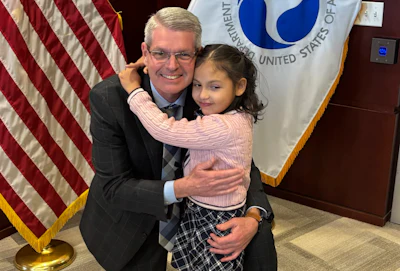
She’s Dalilah Coleman.
President Donald Trump introduced her during his State of the Union address last month, and now trucking industry supported legislation with her name on it has moved closer tio becoming law.
On March 18 the House Transportation and Infrastructure Committee approved Dalilah’s Law by a vote of 35–26 moving the legislation toward a vote by the full House.
The legislation is named for the 5-year-old girl who was severely injured in a June 2024 crash involving Partap Singh, a trucker who did not have legal residency status in the U.S. and who had obtained a commercial driver’s license from California.
The bill comes at a time when there have been several other high profile fatal truck accidents involving foreign-born drivers, which have spurred a federal crackdown on how states issue non-domiciled CDLs. It also was created against a backdrop of Trump declaring English the official language of the U.S. and the feds requiring all truckers to speak and read road signs in English.
Led by Highways and Transit Subcommittee Chairman David Rouzer, a Republican from North Carolina, the bill would, if passed and signed into law, modify commercial driver’s license requirements nationwide. It requires English language proficiency for CDL holders, prohibit states from issuing CDLs to individuals without legal status, and increase oversight of training providers that certify drivers.
Jim Banks, a Republican from Indiana, introduced a similar bill in the Senate last month following Trump’s speech.
The bill also incorporates provisions from Representative Dave Taylor’s (R-OH) Connor’s Law related to English proficiency requirements.
Key provisions of Dalilah’s Law include:
- Place drivers who do not meet requirements out of service
- Increases financial penalties on states that fail to verify CDL applicants’ eligibility
- Updates entry-level training standards CDL schools, which are also under federal scrutiny
National trucking organizations have come out in support of the law.
On March 16, the American Trucking Association’s President and CEO Chris Spear said:
“Strengthening the integrity of the commercial driver’s license system is essential to restoring accountability, removing bad actors from the road, and protecting the overwhelming majority of professional truck drivers who follow the rules and uphold high standards.


“The motoring public deserves confidence in who is operating heavy commercial vehicles. This legislation reinforces that trust by ensuring drivers are properly trained, tested, and qualified. By holding states accountable for how CDLs are issued, the bill establishes a consistent, lawful framework for employment in this safety critical industry—setting uniform testing standards and improving employer notification systems so agencies and industry can better share information. Together, these reforms increase transparency, support responsible carriers and drivers, and strengthen the safety and reliability of the nation’s freight network.”
The Owner-Operator Independent Drivers Association also announced its support. OOIDA President Todd Spencer said:
“No family should ever have to endure the kind of tragedy that nearly took Dalilah Coleman’s life and inspired Dalilah’s Law. OOIDA and truckers across America strongly support Chairman Rouzer's Dalilah’s Law. This legislation represents a major step forward for highway safety and the integrity of the trucking profession.
“By strengthening federal oversight and certification requirements for CDL training providers, this bill takes direct aim at the ‘CDL mill’ problem that has allowed unqualified drivers onto our roads. Congress must now pass Dalilah’s Law to turn the page on decades of cheap labor policies informed by a false 'trucker driver shortage' narrative and make clear that safety, not corporate profit, comes first on America’s highways.”