by Ron Bourque, Aim Senior Vice President of Safety & Risk Management
In the trucking industry, safety performance is meant to follow a carrier for the life of the company. Compliance history, crash records, roadside inspection results, and safety ratings exist to protect the motoring public and to ensure that responsible carriers are not undercut by bad actors. Yet one tactic continues to undermine this system — the rise of chameleon carriers.
 Ron Bourque
On paper, the company appears new. In practice, the same trucks, drivers, managers, and unsafe behaviors often remain.
This continuity is not theoretical. Organizations that work closely with carriers – including those involved in equipment leasing – sometimes see continuity that is not immediately apparent in public safety records. When the same equipment, drivers, and operating patterns persist while DOT numbers change repeatedly, it reinforces a simple reality: changing an identifier does not change crash risk.
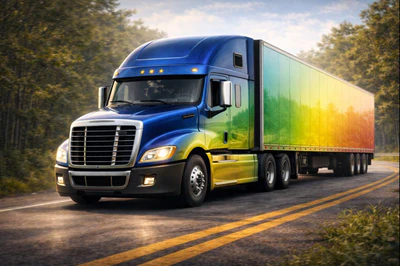
Like a chameleon changing its color, these carriers shed their past just long enough to blend back into the industry and potentially cause major problems for other motorists on the roadway. In some cases, operating under multiple DOT numbers further fragments safety history, making it easier to abandon a troubled record while presenting a cleaner, more stable profile to the market.
The motivations behind chameleon carriers are rarely accidental. Common motivations include avoiding accountability for poor safety ratings or enforcement actions, escaping financial obligations such as unpaid penalties or claims, and maintaining access to shippers that screen carriers based on safety performance. While regulatory agencies have made progress identifying reincarnated carriers, the system still allows gaps that can be exploited — often at the expense of safety.


The most concerning aspect of chameleon carriers is not administrative deception — it is the real-world safety risk they pose. Changing a company’s name does not change a flawed safety culture. When carriers fail under one identity due to repeated violations, fatigued driving, poor maintenance, or inadequate training, those same behaviors tend to continue when the company resurfaces. The result: high-risk carriers are allowed back on the road without addressing the root causes that made them unsafe in the first place.
Research and enforcement experience consistently show that drivers with a history of violations and crashes are more likely to be involved in future incidents. The same holds true for high-risk carriers. When these carriers rebrand and reset their records, early warning signs disappear — until another serious crash brings them back into focus. For motorists, this means sharing the road with trucks that appear compliant on paper but have a hidden safety history.
Chameleon carriers distort the competitive landscape. Carriers that invest in training, maintenance, technology, and compliance often operate at higher cost. When unsafe carriers erase their past and re-enter the market, they can underbid responsible fleets until their results build towards higher costs in insurance, damage claims and equipment expenses. At least for a short period of time, risk-taking is rewarded and safe companies are penalized. Over time, industry-wide safety standards are eroded and we all pay the cost.
Regulators are not blind to the issue. The FMCSA has implemented processes to identify carriers attempting to reincarnate through shared ownership, management, equipment, and driver rosters. They have explicit authority to shut down carriers found to be simple continuations of previous unsafe operations. The FMCSA is focused on intent and looks for common ownership and management, shared power units or trailers, driver roster overlap and physical address continuity. Timing is also a strong indicator, if a new DOT number appears immediately after an out-of-service order it is far more likely to receive scrutiny than a truly new entrant. However, detection often occurs after unsafe operations have resumed. Regulators are challenged by scale. In some years, the FMCSA has issued over 100,000 new DOT numbers, and identifying intent requires data, resources, and time.
Regarding new measures being taken at the FMCSA, Dave Heller of the Truckload Carriers Association shared in a recent webinar, “the FMCSA is working on a new registration program called MOTIS that will provide a method of double verification of identity that incorporates a facial scan that mirrors the provided government issued identification. This process, designed by Idemia (the provider for TSA Pre-Check), is currently being presented to new entrants and will ultimately be required for all existing motor carriers. By adding this level of identity verification, the FMCSA provides a critical data point to combat the chameleon carrier problem, signaling that they are "on the hunt" to eliminate these bad actors from the industry.”
Safety does not rest solely with regulators. Industry partners play a critical role in preventing chameleon carriers from thriving. Shippers and brokers can look beyond “new entrant” status and review ownership connections of the carriers that they do business with. Shippers can ask deeper questions about prior operating history, require carriers to use safety technology like ELDs and cameras.
Ultimately, shippers can refuse to do business with carriers that show signs of reincarnation. When safety history matters in procurement decisions, the incentive to rebrand disappears.
Strong safety programs are not born — they evolve. They are built through hard lessons, incident reviews, near-miss analysis, investment in training and maintenance, and leadership willing to confront uncomfortable truths before a crash forces the issue.
Crash prevention is dependent on this evolution. Fleets that study trends, correct behavior, and reinforce standards reduce exposure to catastrophic loss over time. Fleets that do not evolve carry forward the same risk factors over and over until those risks inevitably surface in a serious crash.
Chameleon carriers avoid this work. Instead of addressing the conditions that elevate crash risk, they reset their identity and re-enter the market with unresolved hazards still embedded in their operations. From a business-risk perspective, this is not reinvention — it is risk concealment. When risk is concealed rather than reduced, it does not disappear. It transfers to insurers through claims, to shippers through disrupted supply chains and reputational harm, and to the public through preventable crashes. One severe incident can erase years of savings, end commercial relationships, and permanently damage trust.
If the industry is serious about reducing crashes and managing enterprise risk, we must close the gaps that allow unsafe carriers to repeatedly reset the clock. Accountability, transparency, and continuous improvement are not just safety principles — they are sound business practices. Because on the road, unresolved risk eventually becomes realized loss.
New information:
According to a recent Truckload Carrier Association webinar, Dave Heller informed us that there is regulatory activity around the chameleon carrier issue. The FMCSA is working on a new registration program that will provide a method of double verification of identity that incorporates a facial scan that mirrors the provided government issued identification. The new program is called MOTIS. This is being presented to new entrants now and will ultimately be pushed to existing motor carriers. This registration process could help provide an additional data point to combat the chameleon carrier problem. The new process was designed by Idemia (TSA Pre-Check provider). There is no doubt that they [FMCSA] is on the hunt for them [chameleon carriers] and are trying to take action to eliminate them from the industry.