A former trucking industry safety director and law enforcement officer has been named chief safety officer for the federal agency regulating the American trucking industry.
The U.S. Department of Transportation Monday announced Steve Dowling has joined the Federal Motor Carrier Safety Administration as its chief safety office. He brings more than 35 years of combined industry and law enforcement experience to th position.
"Steve Dowling's career has been defined by an unwavering commitment to public safety, operational excellence, and service," said FMCSA Administrator Derek Barrs. "His experience leading in both law enforcement and the trucking industry gives him a unique perspective that will help strengthen FMCSA's mission."
Dowling joins FMCSA after serving as senior director of safety at Covenant Logistics and in leadership roles across multiple commercial motor vehicle industry organizations. While at Covenant Logistics, Dowling helped lead the company to three consecutive years of record reductions in crash rates through a strong focus on safety performance and operational excellence.
Before his private-sector wprk, Dowling served with the California Highway Patrol, where he rose to chief of the Valley Division. In that role, he commanded an 850-person force serving the greater Sacramento region and oversaw operations across 20 commands, a commercial vehicle enforcement facility, and three communications centers that encompassed ten counties.
As chief safety officer, Dowling will help lead FMCSA's safety programs and initiatives.
Ohio reminds truckers to secure loads
The Ohio State Highway Patrol (OSHP) today said it urges all commercial drivers, construction haulers and companies transporting materials to make sure their load is properly secured before traveling on the road.
As traffic continues throughout the summer construction season and into the back-to-school season, troopers are seeing a rise in incidents involving debris falling from trucks and trailers – putting motorists at risk.
Unsecured or unchecked loads can lead to dangerous roadway conditions, including flying debris, sudden obstacles and unexpected hazards that leave drivers with little time to react. Even a small object, such as a rock or piece of loose material, can cause serious vehicle damage, impair visibility or trigger chain‑reaction crashes, according to the OSHP.



“Making sure a load is properly secured isn’t just a regulatory requirement, it’s a responsibility that directly impacts every driver who shares the road,” said Lieutenant Jacob D. Landis, OSHP Licensing and Commercial Standards. “When debris enters the roadway, the consequences can be devastating.”
The patrol said it encourages companies and operators to conduct routine inspections of trucks, trailers and equipment before every trip. This includes verifying that load covers are in place, tie‑downs are secure and material is properly contained.
Troopers said they will continue monitoring commercial traffic statewide and enforcing violations involving unsecured loads, debris‑related hazards and equipment safety.
Equipment demand strong
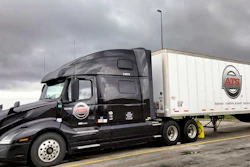
Demand for new equipment remains strong, buoyed by meaningfully improved freight rates.
ACT Research said initially driven by severe contractions in the driver supply following four years of trucking overcapacity, the Supreme Court’s Montgomery decision relating to broker liability, stricter ELD/HOS rule enforcement, and new carrier registration rules have added to supply constraints and rate momentum.
The recovery in U.S. manufacturing and ongoing data center and utility buildout has aided the demand side of the equation, as published in the latest release of the North American Commercial Vehicle OUTLOOK.
“Underlining the robustness of the current demand environment has been the backlog boosting surge in tractor orders that began last December. Year-ago August tractor order backlogs fell to a nearly 13-year low. In our latest industry data, June-ending order backlogs were more than double year-ago levels,” according to Ken Vieth, ACT’s President and Senior Analyst. “While the front-end market metrics have maxed out available 2026 capacity, tractor sales remained below replacement levels in 1H’26, as industry OEMs and suppliers work to bring more production capacity online. The rebound in tractor demand follows the four-year drop in profitability that culminated in generationally low carrier profit margins in 2025.”
Vieth said, “Many of the capacity constraints will persist and worsen, but the easing in freight demand seasonality in Q3 should temporarily take some of the pressure off capacity. Higher rates and driver pay will begin to offset these constraints, but the supply-side challenges for the industry are extraordinary as we move further into this new upcycle.”
ICYMI
Fewer, but more valuable, cargo thefts occurred during second quarter
FMCSA seeks to upgrade English language proficiency to be a rule
ICE part of federal crackdown targeting foreign truck drivers